
Updated: January 29, 2026
Written by Dan Simms
Dan was a property manager from 2015 to 2020, during which time he managed and oversaw the upkeep and repairs of over 2,000 residential properties. He uses that experience, as well as his extensive DIY knowledge, to bring reliable information to homeowners about renovations and home-related projects. Since 2020, he has been using his experience to write about home improvement, and his work has appeared on sites like USA Today, CNN, Angi, and Today’s Homeowner.
Learn moreReviewed by Dan Simms
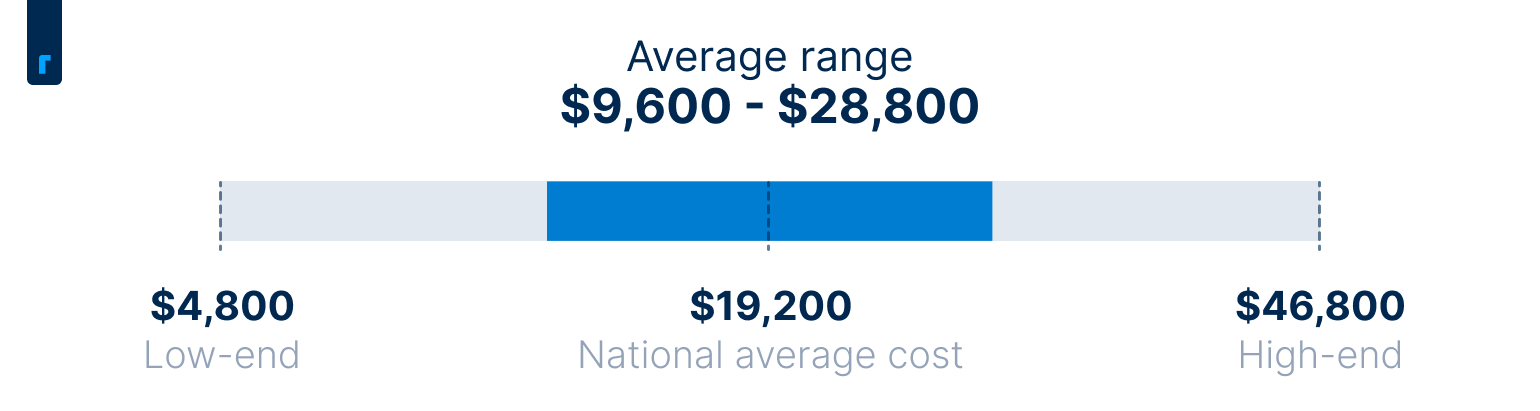
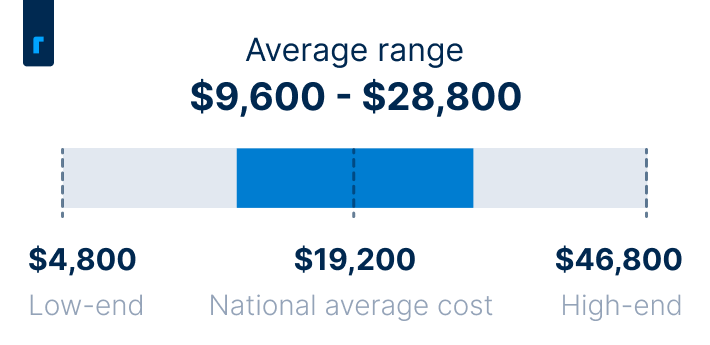
An aluminum roof costs an average of $19,200, and most homeowners pay somewhere between $9,600 and $28,800 for a 2,000 sq.ft. home. Your total will depend mostly on the size of your roof, your home’s square footage, the complexity of your roof design, and the type of aluminum roof you want to install.
Most homeowners’ minds immediately go to asphalt shingles when considering a new roof, and while an aluminum roof costs more, it can also last twice as long, provides better protection against roof leaks and snow accumulation, and offers greater curb appeal. Aluminum roofing is a better option for long-term value, especially in extreme climates, where it can either reflect solar heat or help shed snow more readily.
Aluminum Roof Price
Aluminum Roof Cost by Roof Size
On average, you’ll pay between $4 and $12 per square foot for an aluminum roof, which means bigger homes with more roof square footage to cover will always cost more.
For a typical 2,000-square-foot home, you’d need between 2,200 and 2,400 square feet of roofing if you have a typical roof pitch of 6/12, depending on the roof style and complexity. You can get a more accurate estimate based on your home’s square footage below, but note that roof slope and design can also play a major role in roof size and total installation costs.
House Size | Roof Size | Cost Range |
1,000 sq.ft. | 1,200 sq.ft. | $4,800 – $14,400 |
1,500 sq.ft. | 1,800 sq.ft. | $7,200 – $21,600 |
2,000 sq.ft. | 2,400 sq.ft. | $9,600 – $28,800 |
2,500 sq.ft. | 3,000 sq.ft. | $12,000 – $36,000 |
3,000 sq.ft. | 3,600 sq.ft. | $14,400 – $43,200 |
Aluminum Roof Replacement Cost by Type
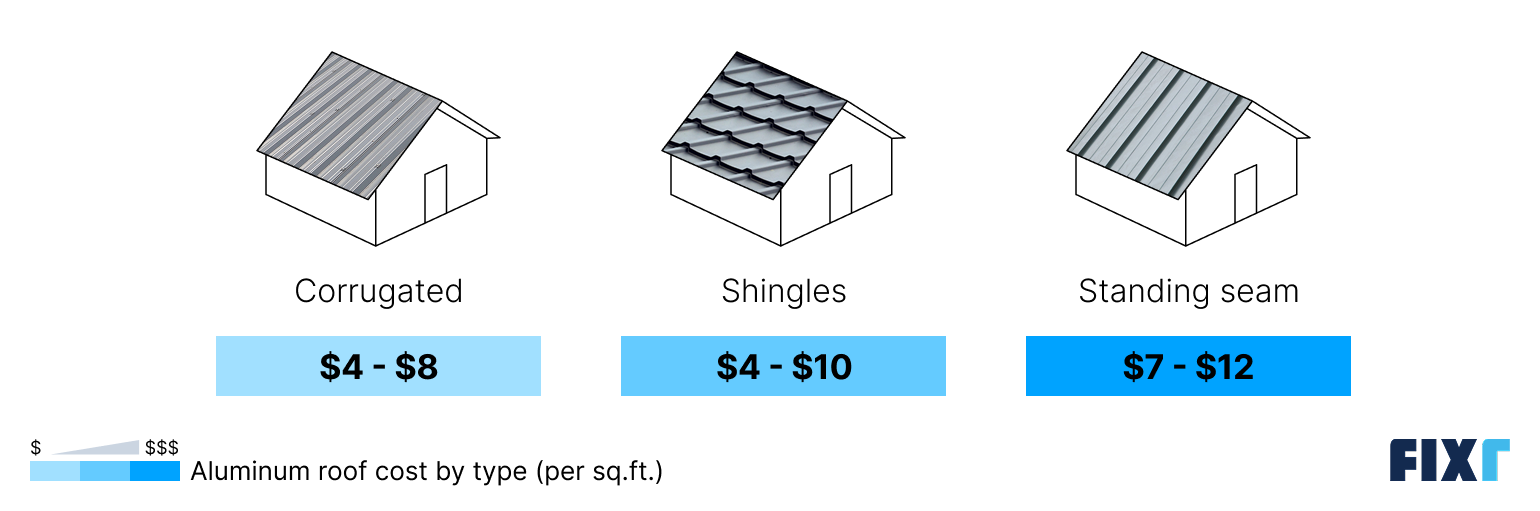
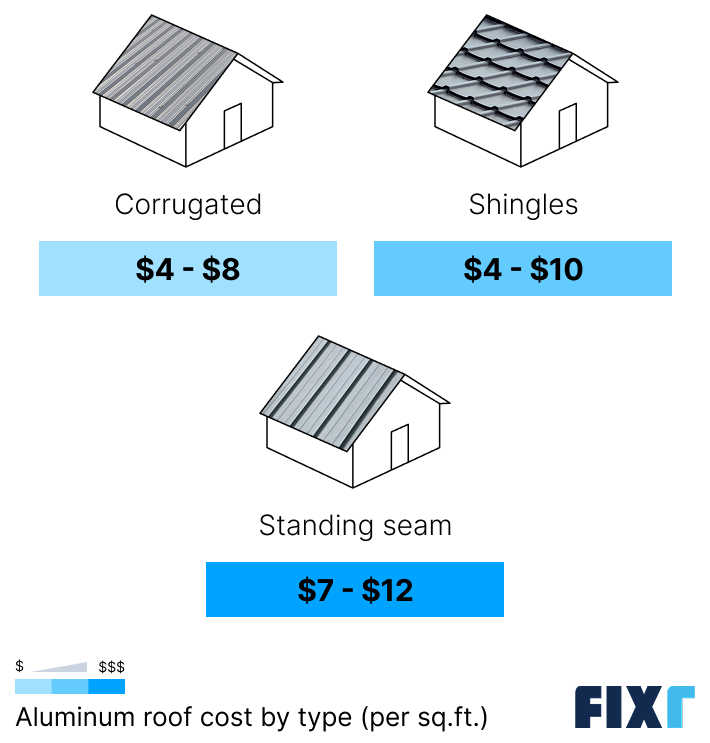
The style of aluminum roof you choose to install will also play a crucial role in your total cost and is an important consideration among your roofing options. The most budget-friendly choice is a corrugated aluminum roof, which costs between $4 and $8 per square foot. This style is the lightest and thinnest, making it easier to install. However, its exposed fasteners can lower curb appeal and increase the risk of leaks. For a more balanced option, aluminum shingle roofing is priced from $4 to $10 per square foot. It offers improved curb appeal and a reduced risk of leaks because its fasteners are hidden from view.
A standing seam aluminum roof costs between $7 and $12 per square foot. While this is the most expensive option, it provides the best curb appeal and leak protection due to its hidden fasteners and minimal number of seams. The complex installation process for standing seam panels also contributes to its higher cost.
Type of Aluminum Roof | Average Cost per Sq.Ft. |
Corrugated | $4 – $8 |
Shingles | $4 – $10 |
Standing seam | $7 – $12 |
Labor and Installation Costs of an Aluminum Roof
On average, labor will account for 40% to 60% of your total, which means an average of between $7,600 and $11,500. On a per square foot basis, you should account for between $1.60 and $7.20 for aluminum roof installation. This often includes removing the old roof but should always include prepping the roof surface, installing new underlayment and flashing, and installing the actual roofing material.
Labor costs will vary based on the number of stories your home has, as taller homes will require additional safety equipment and extend the time it takes to move your roofing into place and install it. They will also vary based on the type of aluminum roofing you install since corrugated roofing with exposed fasteners is much faster and easier to install than metal shingles and standing seam roofing with hidden fasteners.
There are many other factors that can affect labor costs. For example, steeper roofs, which are common in areas that see a lot of snowfall, are more dangerous to navigate and will require special safety equipment that makes the job take longer.
Additional Cost Factors
There are many other things that can affect your total costs, so be sure to consider all of the following minor factors to get the most accurate estimate possible.
Roof complexity
Simple gable designs are the most budget-friendly. Conversely, roofs featuring numerous hips, valleys, and ridges increase expenses due to extended installation times and higher material waste from custom cuts.
Roof pitch
The steepness of your roof has a significant impact on the total cost. While a standard 6/12 pitch keeps prices average, steeper roofs, which are common in snowy climates, require more materials, specialized safety equipment, and additional labor.
Geographic location
Local labor rates generally align with your area's cost of living. Additionally, regional weather patterns may dictate the need for specific systems, such as premium standing seam aluminum, to better handle heavy rainfall and prevent leaks.
Old roof removal
Some contractors include the removal of your old roof in their quotes, so be sure to check whether this is included. Tearing off and hauling away existing materials can add between $1,000 and $7,400 to your project, depending on the weight and size. Removing asphalt shingles is typically on the lower end of that range, costing between $1,000 and $2,000.
Unexpected repairs
Once the old roof is removed, contractors may discover underlying water damage. Repairing the roof decking is a necessary step that can add anywhere from $100 to over $3,100 to the final bill, depending on the severity.
Additional materials
Beyond the aluminum itself, components like flashing and underlayment affect the budget. Replacing flashing typically costs $200 to $500, while opting for high-durability underlayment upgrades can add several hundred dollars more.
Permits and inspections
Most municipalities will require permits for roof replacement, as well as inspections to confirm the work was done in accordance with the local building code. In most cases, you’ll pay between $100 to $1,000 for roof replacement permits, and your cost will depend on your building department’s fee schedule.
Aluminum Roof vs. Shingles Cost
Asphalt shingles are, by far, the most popular roofing material in the U.S., so if you’re considering installing an aluminum roof, chances are you’re comparing that possibility to an asphalt shingle roof. When it comes to cost alone, aluminum roofs cost between $4 and $12 per square foot, while asphalt shingle roofs cost between $3 and $6 per square foot, in most cases. Generally speaking, you’ll pay about twice as much for an aluminum roof.
However, it’s not all about the upfront cost. Aluminum roofs last an average of two times as long as asphalt roofs, which means you get the exact same value from a cost-to-lifespan perspective. During the roof’s lifespan, though, an aluminum roof comes with a lower risk of roof leaks, reflects solar heat, and offers better protection against heavy snow accumulation, making it a better option overall, especially in extreme climates. You also get the added benefit of low maintenance and excellent energy efficiency.
Asphalt Shingle Roof | Aluminum Roof |
$3 – $6 per square foot | $4 – $12 per square foot |
Lasts 15 to 30 years | Lasts for up to 50 years |
Higher risk of leaks | Lower risk of leaks |
Catches snow accumulation | Sheds snow rapidly |
Absorbs solar heat | Reflects solar heat |
Minimal interior noise during rain | Can be noisy during rainfall |
Good curb appeal | Excellent curb appeal |
Average value add | Larger bump in home value |
DIY vs. Professional Installation
While saving between $7,600 and $11,500 on labor might make a DIY aluminum roof installation tempting, it is rarely the most cost-effective choice in the long run. Professional expertise is particularly crucial for metal roofing, which requires high precision to function correctly. Any installation errors can compromise your home’s primary defense against the elements, leading to severe water damage and repair bills that far outweigh any initial savings.
Beyond the financial risks, professional installation eliminates the significant danger of personal injury associated with roofing work. Hiring a specialist ensures the project is completed safely and according to technical standards. For a project this complex and risky, the investment in a professional contractor provides essential peace of mind and long-term protection for your home.
How to Save Money on Aluminum Roof Installation
Since aluminum roofing is more expensive than traditional asphalt shingles, it’s common for homeowners to look for ways to save on their roofing project costs. Here are some tips for keeping your re-roofing costs as low as possible.
Choose your roof type carefully: Corrugated aluminum roofing is the most affordable option and can cost half as much as high-end standing seam roofing. However, you should think about roof durability and resale value, too. Standing seam aluminum roofs are more cost-effective. The might be more expensive upfront, but add more to your home value because they look nicer, and they also provide better protection from roof leaks and expensive roof repairs, especially in areas where heavy rainfall and snowfall are common.
Aim to get the work done during the off-season: Roofers are usually busiest in the summer, so if you’re not carrying out emergency roof replacement, scheduling the work for the spring or fall could save you some money on labor costs due to lower demand.
Get at least three estimates: Make sure you get at least three roof replacement quotes to compare and find the best value. Rule out roofers that come in well above or below the average, as well as those who don’t have experience with metal roofing.
Choose your metal roof gauge carefully: Aluminum roofing is available in different thicknesses, ranging from 22 gauge to 29 gauge. Higher gauges are thinner and more affordable, but thicker gauges are better suited for extreme climates that could threaten thinner metal panels.
FAQs
Aluminum roofs can last anywhere from 20 to 50 years, depending on the style of roof you choose, the thickness of the metal you install, and the climate in your area. Standing seam aluminum roofing will last the longest thanks to the few seams and hidden fasteners, especially if you choose a thicker gauge. Generally speaking, an aluminum roof will last twice as long as an asphalt shingle roof.
Aluminum roof coatings can help protect against leaks, but if you’re concerned about water damage or exposure to heavy rain or snow, upgrading to a standing seam aluminum roof and hiring a pro for the installation is your best bet. A standing seam metal roof has few seams between panels, and the fasteners are hidden to add further protection from water intrusion. Hiring a pro will also ensure that a faulty installation isn’t the reason for a higher risk of leaks.
An aluminum roof costs an average of $19,200 for an average-sized home, and most homeowners pay between $9,600 and $28,800. This is based on the average price range per square foot for aluminum roofing, which falls between $4 and $12, and the average home size of just under 2,000 square feet, which usually requires 2,400 square feet of roofing. Your costs could increase if you have a larger home, a steeper roof, or want a thicker roofing material for better protection from damage.
Yes, you can paint an aluminum roof, although the process is time- and labor-intensive. Ideally, you should sand down the surface, apply a primer, and then apply a paint designed to adhere to metal surfaces. While painting an aluminum roof can be expensive, going with a lighter color can yield a cool roof that helps reduce solar heat gain and cooling costs in extreme weather, and it can boost curb appeal, which directly affects your home value.
The main disadvantages of aluminum roofing are high upfront cost and dent susceptibility. Aluminum costs $9 to $18 per square foot installed, is softer than steel, and expands and contracts with temperature changes, which can loosen fasteners or create gaps if not properly installed.