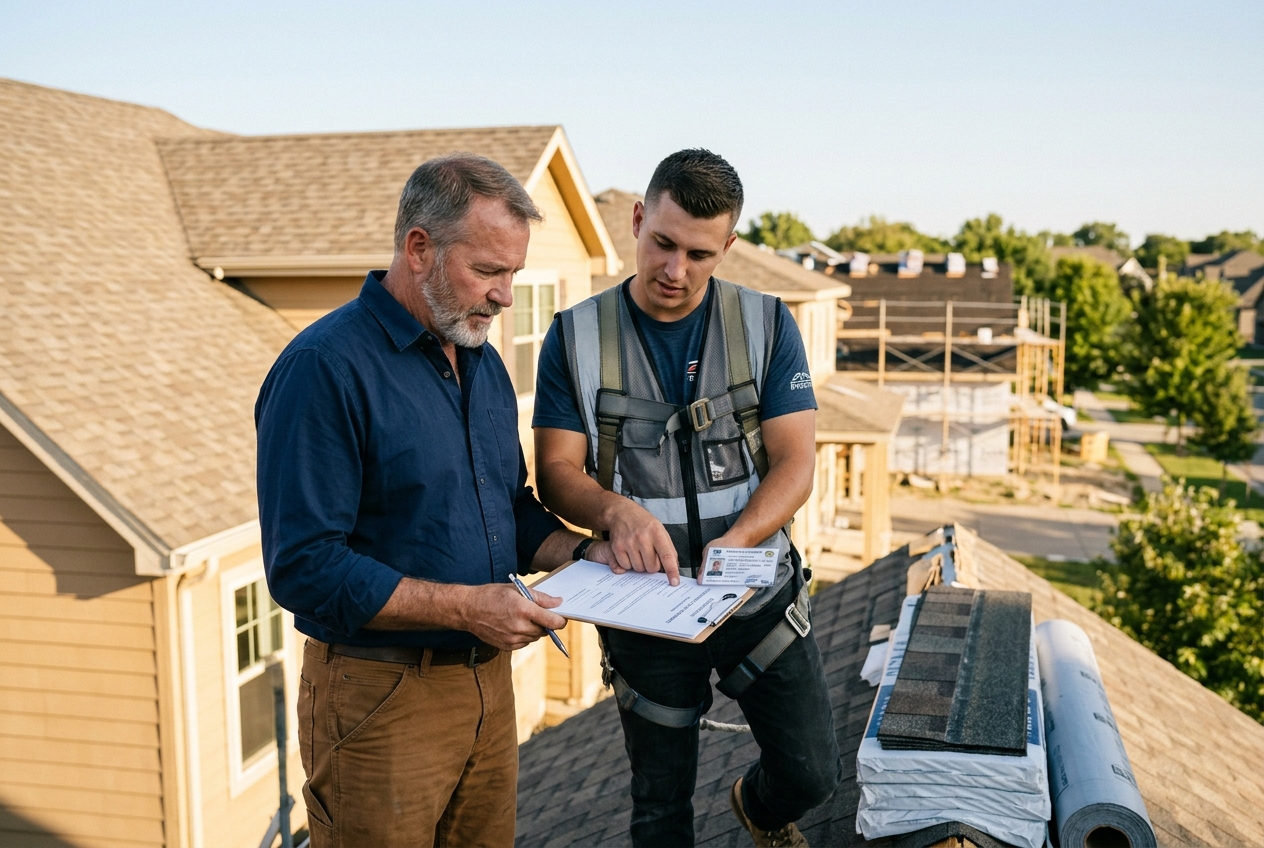
License Verification: State and local licensing for roofing contractors varies widely; always verify credentials through official channels.¹
Insurance Protection: Ensure your contractor carries both General Liability and Workers' Compensation insurance with adequate coverage².
Warranty Details: Understand the differences between manufacturer's and workmanship warranties and ensure they are clearly outlined in your contract.
Contract Essentials: A detailed written contract is crucial, covering scope of work, costs, payment schedules, and warranty information.
Hiring reliable roofing contractors in 2026 requires more than just getting quotes. Homeowners must understand and verify critical credentials, including licensing, insurance, and warranty provisions. This proactive approach protects your investment and ensures a compliant, well-executed project.
State and local regulations for roofing can be complex. Knowing what to look for helps you avoid common pitfalls and select a qualified professional.
Roofing Contractor Licenses
Licensing requirements for roofing contractors vary significantly across the US. What's mandatory in one state might be optional or handled locally in another¹. Always check both state and local regulations for your specific area.
State-Specific Licensing Nuances
Some states have clear statewide licensing for roofing or general contractors. For example, California, Florida, Arizona, and Alabama require a state license for roofing projects, though Alabama's requirement applies to projects over $10,000. Arkansas mandates a license for projects exceeding $2,000¹.
However, other states take a different approach. New York, Colorado, Illinois, Kentucky, Maine, Massachusetts, Missouri, Nebraska, and New Hampshire may not have a statewide roofing license¹. Instead, regulation often falls to city or county governments. This means a contractor might be licensed to work in one city but not in a neighboring one.
How to Verify a License
A legitimate contractor should readily provide proof of their state or local license. You can typically verify this information yourself. Most state licensing boards or local government websites offer searchable databases to confirm a contractor's credentials¹.
Working with an unlicensed contractor carries significant risks. They may lack accountability, and any damages or issues could invalidate your homeowner's insurance claims¹.
Essential Contractor Insurance Coverage
Beyond licensing, reputable roofing contractors should carry specific insurance policies. These protect you from financial liability if something goes wrong during the project². Always ask for proof of insurance.
General Liability Insurance
General Liability Insurance covers damages to your property or injuries to third parties that occur during the roofing project². This protects you if a contractor accidentally damages your landscaping or if a delivery driver trips over equipment on your property.
Minimum General Liability coverage often starts at $1 million per occurrence. However, many commercial clients require higher limits, often between $2 million and $5 million. While some states like Texas, Colorado, and Maine may not mandate minimum general liability coverage, it is still crucial for any contractor to carry it².
Workers' Compensation Insurance
Workers' Compensation Insurance is vital for protecting you, the homeowner, from liability if a contractor's employee is injured on your property². Without it, you could be held responsible for medical bills and lost wages if an uninsured worker gets hurt.
Nearly all states require workers' compensation once a contractor has employees. Texas is a notable exception where it's optional. California C-39 roofing contractors, specifically, must carry workers' comp even if they don't have employees².
Always request a Certificate of Insurance (COI) directly from the contractor's insurance provider, not the contractor. This helps confirm policy validity and coverage limits³.
Verifying Insurance Certificates
A Certificate of Insurance (COI) is proof of active coverage. Contractors should provide these directly from their insurance provider³. Once you have the COI, verify the policy's validity and check the coverage limits. Ensure the policy is active for the entire duration of your project.
Roofing Warranties
A comprehensive roofing project includes two main types of warranties: a manufacturer's warranty and a workmanship warranty. Both are critical for long-term protection of your roofing investment.
Manufacturer's Warranty (Materials Warranty)
The manufacturer's warranty covers defects in the roofing materials themselves, such as shingles or underlayment. For standard asphalt shingles, warranties often range from 20 to 30 years, with some offering limited lifetime coverage.
It's important to understand that coverage can be prorated after an initial non-prorated period, which might be 10 to 15 years. This means the manufacturer's liability decreases over time. For specific information on how solar panels can affect your roofing warranty, you can refer to our article Will Solar Panels Void my Roofing Warranty?.
Workmanship Warranty (Labor Warranty)
The workmanship warranty is provided by your roofing contractor and covers errors in installation or issues arising from improper workmanship. These warranties typically range from 2 to 10 years.
Some manufacturer-backed programs can extend workmanship protection up to 25 years if installed by factory-certified crews. This usually applies when a contractor is factory-certified and installs materials according to the manufacturer's strict specifications.
What Can Void a Warranty?
Both manufacturer's and workmanship warranties can be voided by certain actions. Common reasons include improper installation, unauthorized alterations to the roof (like installing a satellite dish without proper sealing), or failure to perform routine maintenance. Always ensure warranty details are clearly stated in your contract.
The Importance of a Written Contract
A detailed, written contract is essential before any roofing work begins. It protects both you and the contractor by clearly outlining expectations and responsibilities.
Key Contract Elements
Your contract should include full business and client information, including the contractor's license number. It must detail the entire scope of work, specific materials (e.g., asphalt shingles, metal roofing), total project cost, and a clear payment schedule.
Procedures for any change orders must be documented in writing within the contract. This prevents disputes over additional work or costs. The contract should also specify who is responsible for obtaining necessary permits and outline cleanup procedures.
To help you find a suitable professional, review our guide on How to Hire a Roofer: 3 Tips for Finding the Best Contractor.
Payment Schedules
A typical payment structure involves an initial deposit, often between 10% and 30%. The specific range depends on state regulations and project needs. Generally, the deposit should not exceed 10% for any construction project. Progress payments should be scheduled as work advances, with the final payment due only upon satisfactory completion of the project.
Avoid contractors who demand full payment upfront. Paying by credit card or check creates a paper trail, offering better protection than cash payments.
Pros
- + Clarity and Protection: A detailed contract prevents misunderstandings and provides legal recourse if issues arise.
- + Financial Security: Clear payment schedules protect your investment and avoid unexpected costs.
- + Quality Assurance: Documented warranties ensure your roof is covered for both materials and installation.
Cons
- - Time Investment: Thorough contract review and verification takes time and effort.
- - Complexity: Understanding legal and insurance jargon can be challenging without proper guidance.
Making an Informed Decision
Selecting roofing contractors requires due diligence. By systematically verifying licenses, insurance, and warranty details, you safeguard your home and ensure a professional outcome. This approach minimizes risks and provides peace of mind throughout your roofing project.
Remember, your investment in a new roof is significant. Take the time to confirm all necessary credentials and contract terms before signing anything.
No, licensing requirements vary significantly. Some states, like California and Florida, require a statewide roofing or general contractor license for all projects. Other states, such as New York and Colorado, may delegate regulation to local city or county levels, meaning requirements can differ even within the same state¹.
General Liability Insurance covers damages to your property or injuries to third parties during the project. Workers' Compensation Insurance protects you from liability if a contractor's employee gets injured on your property². Both are crucial for homeowner protection.
Minimum General Liability coverage often starts at $1 million per occurrence. However, many commercial clients require higher limits, typically between $2 million and $5 million². It's always best to ensure the coverage is adequate for your specific project's scale.
A Certificate of Insurance (COI) is proof of a contractor's active insurance coverage. It is important because you should request it directly from the contractor's insurance provider to verify the policy's validity and coverage limits³.
A comprehensive roofing contract should include business and client information (including license number), the full scope of work, material specifications, total project cost, a clear payment schedule, procedures for change orders, who is responsible for permits, and cleanup procedures.
A typical payment structure involves an initial deposit, often 10-30%, though some states cap it at 10% for construction projects. Progress payments are made as work advances, with the final payment due upon satisfactory completion. Avoid contractors who demand full payment upfront.
Manufacturer's warranties for materials like asphalt shingles often range from 20-30 years, sometimes offering limited lifetime coverage. Workmanship warranties provided by contractors typically range from 2-10 years, though some manufacturer-backed programs can extend this to 25 years.
Both manufacturer's and workmanship warranties can be voided by improper installation, unauthorized alterations to the roof (like certain satellite dish installations), or failure to perform routine maintenance. Always review your warranty details carefully.
Deana is a Home Improvement Editor with a passion for helping homeowners navigate renovation, repair, and remodelling with confidence. Specializing in roofing, kitchen and bath remodelling, and outdoor living spaces, she combines industry knowledge with a genuine commitment to making complex home projects feel approachable for readers at every stage of their journey.
Her path into home improvement media began after several years working alongside licensed contractors in project coordination, where she gained firsthand exposure to the realities of home renovation - from permitting delays to material sourcing challenges. This hands-on experience gave her a practical, ground-level understanding of what homeowners actually need to know before hiring a contractor, choosing materials, or starting a project - insight that now shapes every piece of content she creates.
As an editor, Deana oversees content covering product reviews, cost guides, seasonal maintenance tips, and contractor vetting advice, working closely with writers and industry experts to ensure accuracy and relevance. She has a particular interest in emerging trends like smart home technology and energy-efficient upgrades, and enjoys translating technical information into clear, actionable guidance for homeowners.
Beyond editorial oversight, Deana stays closely connected to the pulse of the home improvement industry - tracking shifts in consumer preferences, pricing trends, and the challenges homeowners face when navigating renovation projects, from budgeting to finding trustworthy professionals.
When not editing, Deana enjoys visiting local open houses for design inspiration and tackling small DIY projects around her own home. Based in Adelaide, Australia, she believes a well-maintained, thoughtfully upgraded home is one of the most meaningful investments people can make in their day-to-day quality of life.
Sources:
Roofing License Requirements: What You Need by State (workyard.com)
Roofing Insurance: Essential Coverage for Roofers in 2026, John Brown, 2025 (contractorsliability.com)
Complete Guide to Roofing Contractor Insurance in 9 States [2026], Stephen McClure, 2025 (fcisgroup.com)