Updated: January 23, 2026
Written by Dan Simms
Dan was a property manager from 2015 to 2020, during which time he managed and oversaw the upkeep and repairs of over 2,000 residential properties. He uses that experience, as well as his extensive DIY knowledge, to bring reliable information to homeowners about renovations and home-related projects. Since 2020, he has been using his experience to write about home improvement, and his work has appeared on sites like USA Today, CNN, Angi, and Today’s Homeowner.
Learn moreReviewed by Dan Simms
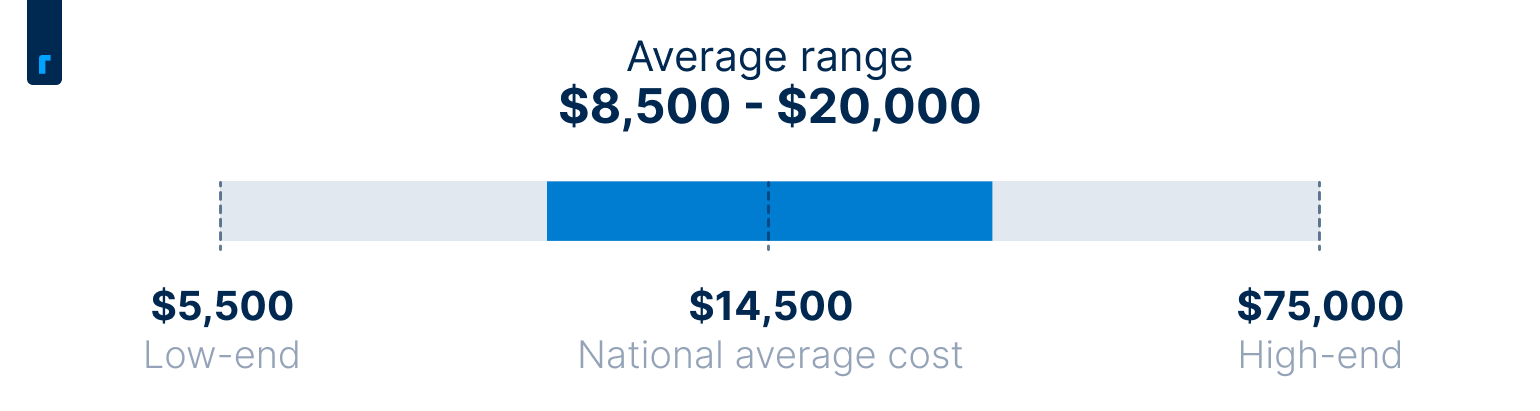
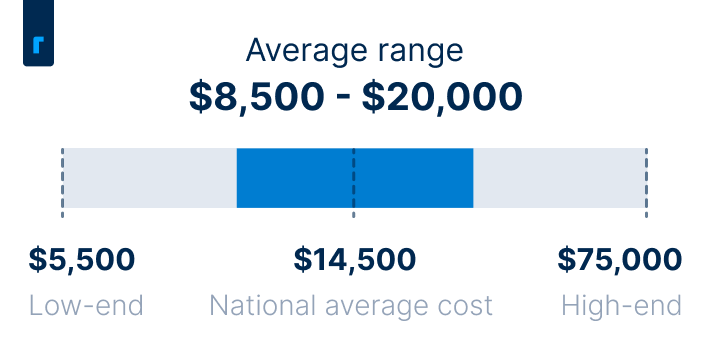
The average cost to replace siding on a 2,000 sq.ft. home is $14,500, with most homeowners spending between $8,500 and $20,000. Costs vary primarily by siding material and home size, but location, existing siding, and installation complexity also play a role.
Siding is one of your home’s primary defenses against the elements, as well as a primary driver of curb appeal. Replacing siding means reducing the risk of leaks and water damage, and it will make your home more visually appealing, valuable, and, in many cases, energy-efficient.
House Siding Cost
Key Factors That Influence Siding Replacement Cost
There are a few important factors that can influence home siding replacement costs. Considering each one will help you estimate your budget more accurately.
Cost of Siding a House By Material
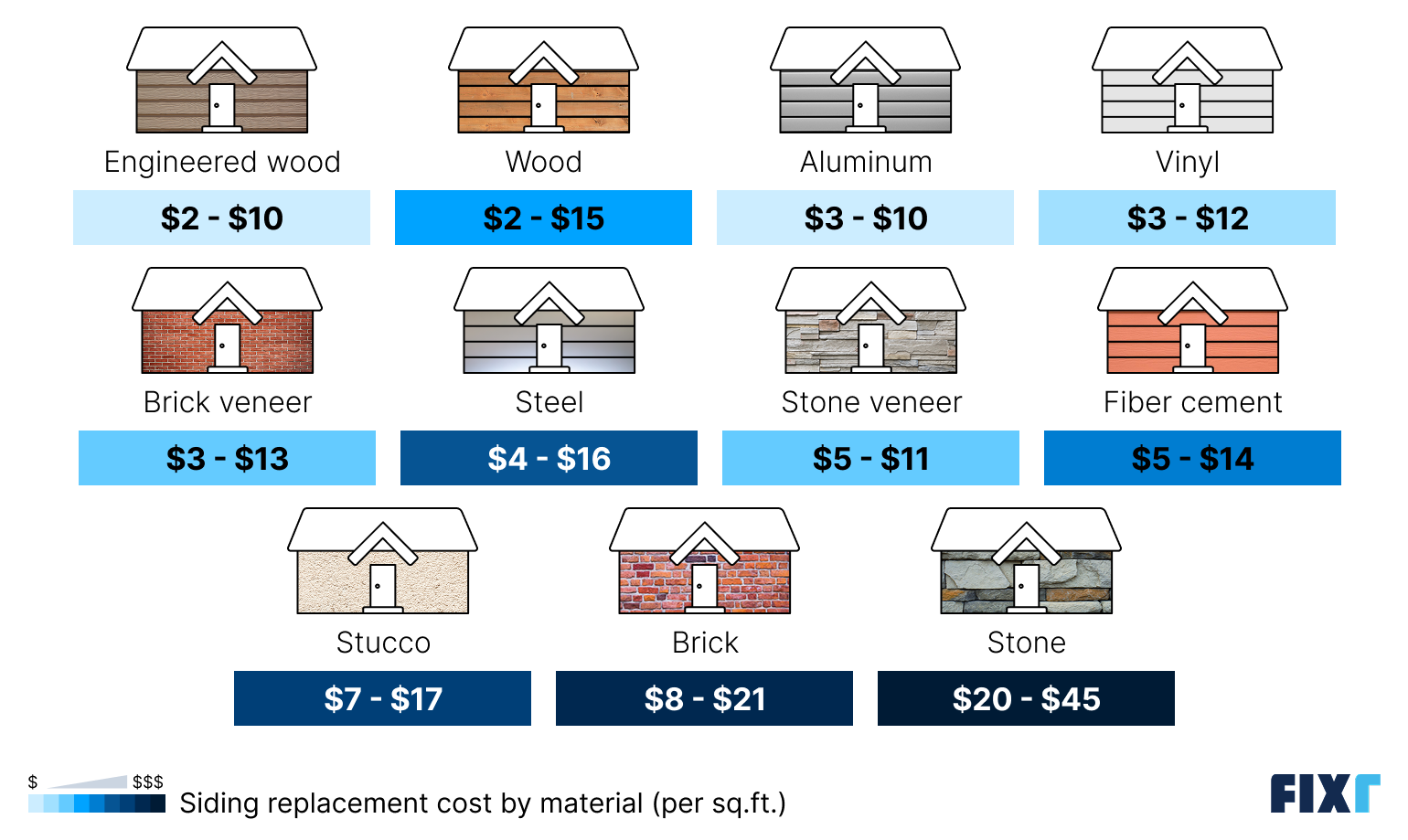
The siding material you choose is one of the most important cost factors to consider, as different materials range from $2 to $45 per square foot. Some wood and engineered wood siding can cost as little as $2 per square foot, while high-end options like real brick and stone can cost $8 to $45 per square foot.
Vinyl is the most popular siding material in the U.S. and costs between $3 and $12 per square foot, including the labor to install it. It offers low maintenance and broad climate compatibility, though it provides limited insulation. Fiber cement is another popular choice thanks to its durability, low upkeep, and strong weather resistance.
Brick and stone provide premium aesthetics and insulation, but are expensive. Many homeowners opt for brick or stone veneer to achieve a similar look at a lower cost.
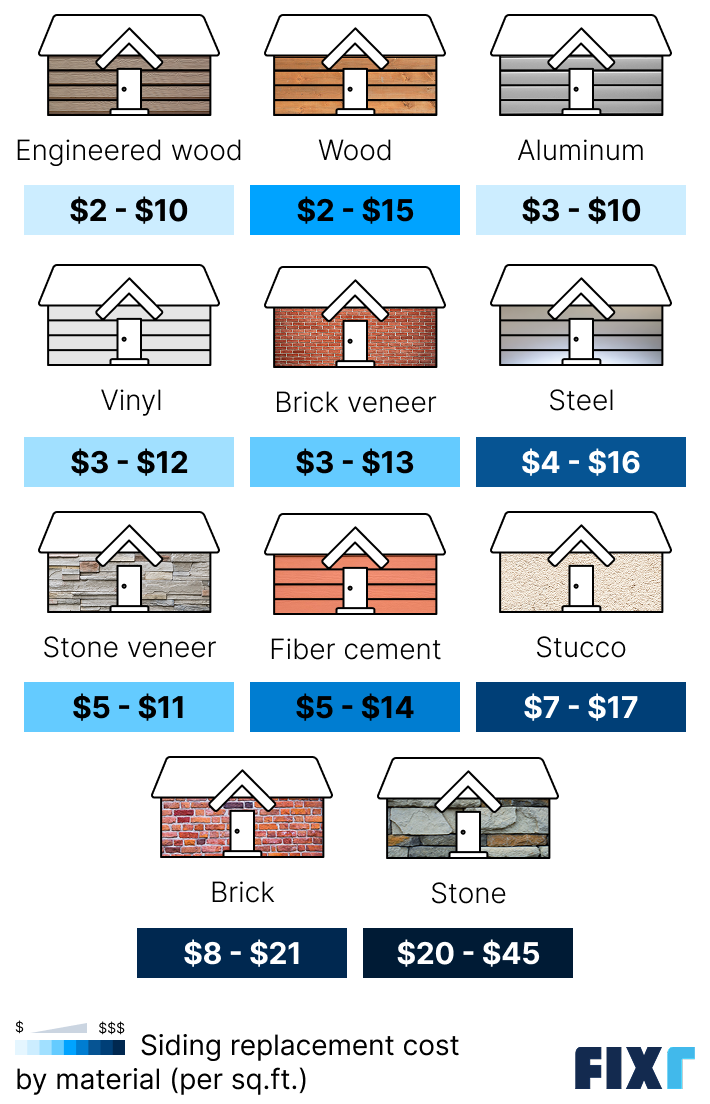
Material | Cost per Square Foot |
Engineered wood | $2 – $10 |
$2 – $15 | |
$3 – $10 | |
$3 – $12 | |
Brick veneer | $3 – $13 |
$4 – $16 | |
Stone veneer | $5 – $11 |
$5 – $14 | |
$7 – $17 | |
$8 – $21 | |
$20 – $45 |
Material prices fluctuate due to demand, tariffs, and regional availability. Always request local estimates for accurate pricing.
Siding Replacement Cost per Square Foot
Including labor and material costs, you can expect to pay an average of $3 to $15 per square foot, depending on the material you choose. Contractors calculate pricing based on total siding area, making accurate measurements essential for reliable estimates.
Average Cost of Siding a House By Size
Since siding costs scale with square footage, larger homes naturally cost more. Wall layout, number of stories, and openings also affect how much siding is required. You can start by using a siding calculator to determine how much siding you need for your home.
Home Size (Square Feet) | Square Feet of Siding Needed | Average Cost Range |
1,000 | 1,200 – 1,300 | $3,600 – $19,500 |
1,200 | 1,400 – 1,600 | $4,200 – $24,000 |
1,500 | 1,600 – 1,800 | $4,800 – $27,000 |
2,000 | 1,800 – 2,000 | $5,400 – $30,000 |
2,500 | 2,000 – 2,200 | $6,000 – $33,000 |
3,000 | 2,300 – 2,500 | $6,900 – $37,500 |
Siding Installation Labor Cost
On average, you can expect labor to account for between $1 and $4 per square foot of siding you need installed. For the average home, the labor for siding installation costs comes to between $1,800 and $8,000.
While many siding contractors bid on a per-square-foot basis, some may charge based on the time your project will take, with costs ranging from $40 to $90 per hour. Materials like brick, stone, and stucco increase labor costs due to specialized installation requirements.
Additional Factors Affecting the Cost of Siding Replacement
Beyond size and materials, several other factors can influence pricing.
Location
Labor rates vary by region, and climate can influence which materials are appropriate or required.
Removal of existing siding
Expect to pay $1,000 to $2,500 for removal and disposal, depending on material weight and condition.
Structural Repairs
Removing old siding can reveal hidden issues such as rot, water damage, or insect activity. Repairs may add hundreds or thousands to your total, especially if structural elements are affected. Homes with very old or visibly failing siding are more likely to require repairs.
Permits and Inspections
Most municipalities require permits for siding replacement. Permit and inspection fees typically range from $150 to $1,500, depending on local regulations.
Finishing Costs and Accessories
Trim, soffits, fascia, gutters, and flashing may or may not be included in your estimate. Trim alone can add $0.50 to $30 per linear foot, depending on the material.
Add-on | Average Cost |
$4 – $40/linear foot | |
Soffit replacement | $6 – $30/linear foot |
Fascia replacement | $7 – $22/inear foot |
$400 – $1,200 (each) | |
$500 – $2,400 |
Siding Style and Design
Standard horizontal lap siding is the most affordable option, while more intricate designs, such as board and batten or diagonal layouts, require additional labor and materials. Custom colors also increase costs, especially for factory-colored fiber cement. If you’re opting to paint your siding along with the installation, you should budget an additional $1 to $6 per square foot.
Energy-Efficient Siding
Utility costs are on the rise, and many homeowners are responding by opting for energy-efficient home improvements that help keep heating and cooling costs to a minimum. Since siding contributes to overall insulation, consider upgrading to a more insulating material or adding rigid foam insulation behind your siding. While these options may increase replacement costs, they can lead to long-term savings through improved energy efficiency.
Time of Year
Peak siding season runs from late spring through summer. Scheduling work in fall or early winter may reduce labor costs, depending on climate and material availability.
Siding Repair vs. Replacement
Siding repairs cost $2 to $20 per sq.ft., similar to replacement pricing. However, repairs usually involve small sections, making them more affordable overall. Repairs are best for minor, isolated damage, while replacement is recommended for widespread issues, moisture problems, or aging siding.
Consider full siding replacement if:
Damage is extensive or affects large areas
Repairs approach 50% of the replacement cost
Existing siding is near the end of its lifespan
Ongoing issues like leaks or poor curb appeal persist
Is Siding Replacement a Good Investment? (ROI & Value)
Siding replacement offers one of the strongest returns on investment among exterior upgrades. A report published by Fixr.com covering cost vs. value fiber cement siding replacement recoups 114% of its cost at resale, meaning homeowners can often recover their full investment.
Even if you don’t plan on selling anytime soon, siding replacement could be worthwhile. Certain types of siding will help insulate your home and can reduce heating costs in cold climates by 7% to 8%, saving up to $170 per year.
Even if your new siding doesn’t boost energy efficiency, it will reduce the risk of siding failure and will help protect your home from water and pests.
DIY Siding Installation vs. Hiring a Professional
While DIY might seem to save you money upfront, it’s essential to hire a professional to get the work done properly. Installation errors can cause moisture damage, void manufacturer warranties, and reduce energy efficiency. Investing in professional siding installation is always worthwhile to protect your home and maintain your product warranty.
How to Choose a Siding Contractor
Proper installation is critical to siding performance and appearance. Here are a few tips for choosing a reliable siding contractor to get the work done:
Hire a licensed contractor: Always hire a contractor who is licensed and insured. This will keep your product warranty intact and minimize the risk of damage to your home and long-term issues.
Check reviews and company history: Read through reviews online and check each company’s rating on the Better Business Bureau (BBB). Keep an eye out for red flags, which include complaints filed by past customers or a lack of reviews.
Ask about warranties: Companies that provide warranties for their labor are more likely to complete a professional installation with no mistakes that could lead to property damage.
Get at least three quotes: Get estimates from at least three local siding companies to compare prices. This can help you rule out contractors that come in unusually low or unreasonably high, and it can help you find the best value for your money.
How to Save Money on Siding Replacement
Siding replacement costs can get quite expensive, but there are some things you can do to help keep costs down:
Pick your materials carefully: Consider going with a mid-range option that balances upfront cost, longevity, and curb appeal for the best value.
Go with stock colors: Custom colors may suit your style best, but stock options like neutral colors are going to be the most affordable and readily available.
Choose simple styles: Lap siding is the most affordable style, so keeping things simple instead of going with potentially more appealing options, like board and batten, can help reduce your installation costs.
Time your installation properly: Siding contractors are busiest in the spring and summer, so if your local climate allows, you could save some money by opting to replace your siding in the fall or winter.
Look for rebates and incentives: Siding replacement may make you eligible for rebates, tax credits, and other incentives, especially if you choose a more insulating material that boosts home energy efficiency.
FAQs
Most 2,000 sq.ft. homes require 1,800 to 2,000 sq.ft. of siding, costing $5,400 to $34,000, depending on materials and design.
Replacing siding costs an average of $14,500, and costs typically fall somewhere between $8,500 and $20,000. Your price will depend on the siding material you choose, the size and layout of your home, and the existing siding you have on your house.
A 1,500-square-foot house needs between 1,600 and 1,800 square feet of siding, which puts the average cost of siding replacement for this size home between $4,800 and $30,600.
Replacing the siding on your home is often worth it. New siding improves protection, curb appeal, energy efficiency, and resale value, with ROI for mid-range materials ranging from 80% to 90%.